
Opinion
By Scott Brinton
As a media observer, I found CNN’s after-action report on its Oct. 23 town hall with Vice President Kamala Harris to be a classic case of beltway elitism in which the network’s commentators, on the right and left, went to extraordinary lengths to dissect Harris’s every statement through the prism of their Acela bubble while ignoring how her messaging might or might not have resonated with voters in the audience and at home.
Anderson Cooper was his usual affable, polite self while moderating the town hall, pushing the vice president without being pushy. That is, he was fair and objective.
After, the commentators were anything but. At their worst, the Republican pundits, barely able to contain their disdain for the vice president, spewed unabashed partisan venom. Later, the commentators tried to moderate their statements and return the rhetoric to a neutral center, but they never did.
Then, John King, the fairest of the commentators, asked five of the undecided Pennsylvania voters in the audience if they planned to vote for Harris because of the town hall. Three of the five said yes — two immediately and one during the focus group. None said they had yet decided to vote for Donald Trump.
Of the two remaining undecided voters, one said she wanted more specifics on Harris’s policy proposals, particularly on the economy, but found the vice president connected with her as a woman. The other, a Republican, said he found Harris to be respectful of his beliefs, but he could not move past her support for choice and Roe. He appreciated that the vice president approached him after the town hall to speak with him personally. That was, in part, among the reasons he had yet not decided to vote for Trump. The former president’s behavior and speech, he said, were the primary barriers.
Clearly, there was a disconnect between how the CNN commentators believed the audience perceived the town hall and how they actually did. And there you have the trouble with our national news network pundits, who too often seek to steer our political discourse by sowing doubt and confusion among voters before they can reach their own conclusions, thus exacerbating polarization within the electorate. If King had spoken with audience members before CNN turned to its usual cast of politicized commentators, then the network could have offered a more accurate assessment of how the town hall was interpreted by voters, and perhaps more nuanced commentary would have followed.
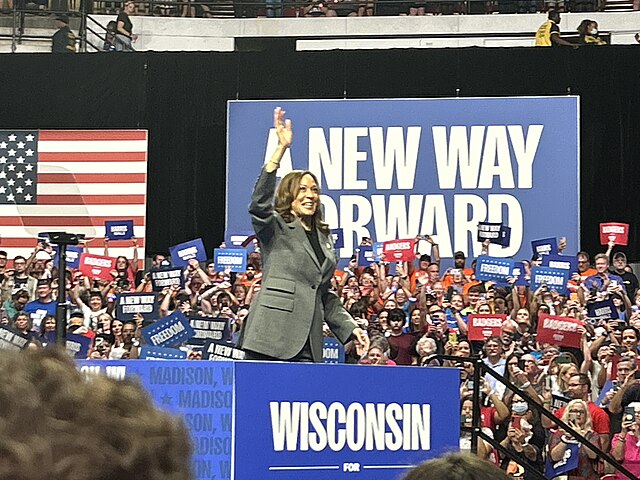
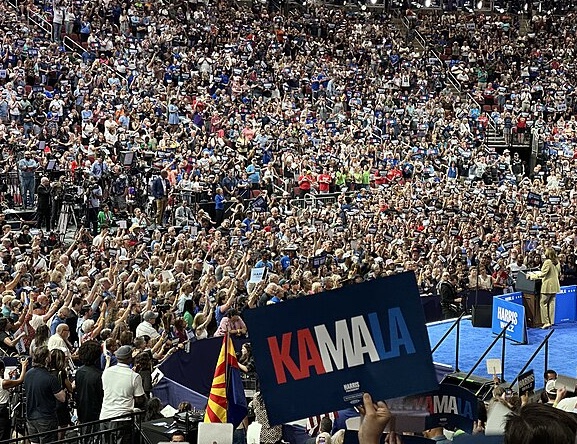
It is little wonder then that Harris chose to first project her message to the electorate in a series of rallies over the summer, attended by hundreds of thousands of voters, before turning to the national media and allowing them to frame her candidacy through Washingtonian political speak.
Interestingly, at one point after the town hall, Jake Tapper, trying to inject some level of journalistic objectivity into the conversation, noted the commentators were holding Harris to a different, tougher standard than they did Trump because the vice president had accepted CNN’s invitation to a debate, while Trump chose to sit this one out — thus the town hall format.
Van Jones, a Harris supporter and former Obama adviser, said the vice president was given an entirely different test than Trump, one that was markedly more difficult. To my mind, one might say Trump and Harris are taking the same exam — the presidential election — but they are graded according to different rubrics by the national network media.
Trump “gets to be lawless,” Jones said. “She has to be flawless. That’s what’s unfair.”

At the same time, one must wonder to what degree race and gender are playing a part in our political commentary. Are the media holding Harris to a more stringent standard than they do Trump because she is a woman who is Black and South Asian and therefore outside the normative White majority paradigm of what a president should look like and how a president should behave? Are they expecting a certain impossible perfectionism, as the media and the public did with Jackie Robinson and Barack Obama? Or has Trump so normalized the outrageous and the outlandish that the national media commentators have become desensitized to it, unable to see the clear difference between Harris’s rhetoric and Trump’s? Or both?
My recommendation: Pay no heed to the network political pundits. Listen to the candidates themselves. You can easily find the two major-party candidates’ direct messaging to voters on YouTube. And read the candidates’ policy proposals.
You will find Harris’s 80-page outline here.
You will find Trump’s one-pager here.
If you are to listen to the national media, which I recommend you do, be sure to watch and listen to PBS, NPR, ABC, CBS and/or NBC in addition to or in place of the major news networks, as these organizations more often eschew partisan commentary in favor of objective reporting.
As well, listen to and read your community media, whose purpose is more often to show how the presidential candidates’ policy proposals will affect voters at the local level, while focusing on down-ballot congressional races that matter equally to the electorate. Congress, after all, is a coequal branch of our federal government.
Scott Brinton is an assistant professor of journalism at Hofstra University’s Lawrence Herbert School of Communication in Hempstead. This commentary represents his views, and his alone. Thoughts? Connect with him on X @ScottBrinton1.

