
Opinion and Analysis
By Scott Brinton
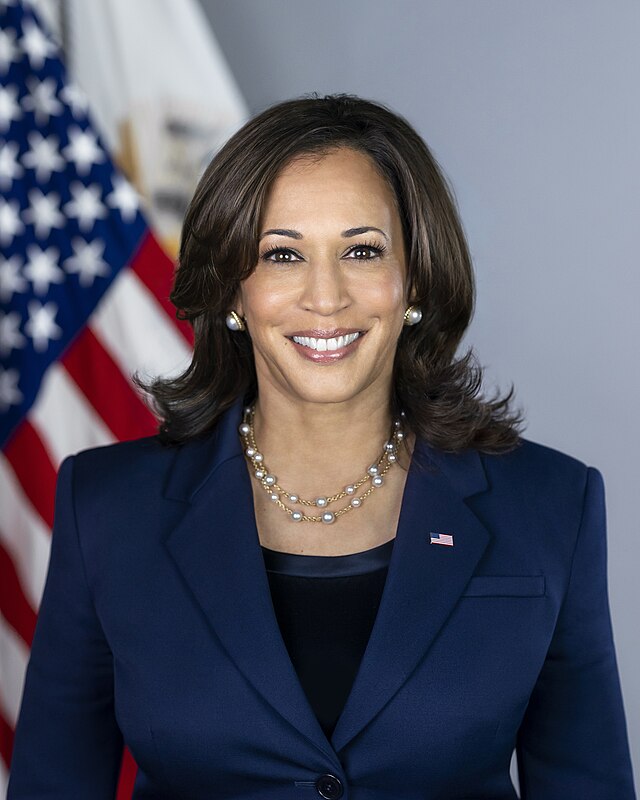
Updated Nov. 19, 2024, 8 a.m.: There is no singular, well-defined reason that Kamala Harris lost her 2024 bid for the presidency. There are many. What is clear is this: Race played a part in this year’s presidential election, whether we want to acknowledge it or not.
Harris, the first Black and South Asian woman to receive a major-party nomination for president, presented herself as an intelligent, eloquent, highly experienced candidate who ran a campaign centered on empathy and joy. Her quick wit and obvious rhetorical skills commanded the stage during the only presidential debate. A majority of Americans believed she won that debate, according to polling. Yet, America chose a White male in this year’s election, as it had done all but twice dating back to our first presidential race in 1788-89.
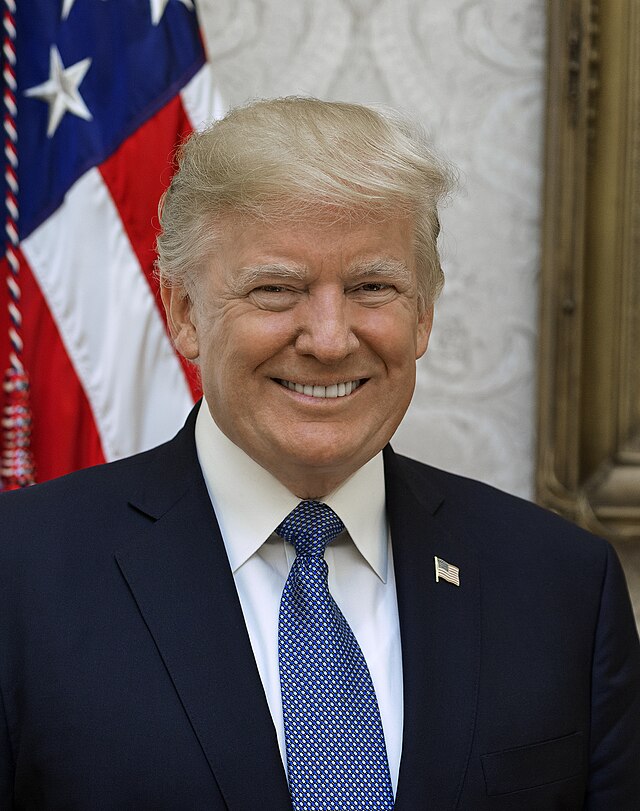
Before Donald Trump is sworn in, all Americans should take time to reflect deeply on what this election has wrought rather than simply moving on. After 2045, when America is no longer a majority-White nation, future generations will expect answers.
Political commentators, both conservative and liberal, have echoed a consistent theme over the past week: Harris lost because of inflation. It rose too high, too fast. Too many people either stayed home or voted their pain by casting their ballots for Trump.
Many pundits contend Trump pierced or broke “the Obama coalition,” which comprised a delicate balance of White voters and overwhelming support among people of color that gave Obama his two electoral wins in 2008 and 2012. Joe Biden recreated the coalition in 2020, propelling him to the White House.
In examining this year’s exit polling data, one finds the Obama coalition frayed, but still largely intact. There is no doubt that Black, Hispanic and Asian people voted in lower numbers for Harris than Biden, according to polling, but the downward shift was small, the Associated Press reported in its election analysis.
Harris presented herself as an intelligent, eloquent, highly experienced candidate who ran a campaign centered on empathy and joy. Her quick wit and obvious rhetorical skills commanded the stage during the only presidential debate…Yet, America chose a White male in this year’s election, as it had done all but twice dating back to our first presidential race in 1788-89.
The National Election Pool, a consortium of media networks —ABC, CBS, CNN and NBC News—surveyed 20,000 voters from across the country as they left the polls. In addition, the NEP polled voters at 40 balloting locations in 10 key states—Arizona, Georgia, Florida, Michigan, Nevada, North Carolina, Ohio, Pennsylvania, Texas and Wisconsin, with 1,500 to 2,000 respondents per state. The primary purpose of the exit polling, conducted by Edison Research, was to understand election demographics.
The NEP poll in the key swing states that determined the election outcome revealed a marginal change in the Black vote—85% identified as Democrat compared to 87% in 2020—with larger shifts seen among Latino and Asian voters. According to the poll, 13% fewer Hispanic and 7% fewer Asian respondents identified as Democrat. Still, a majority within each group called themselves Democrats.
Pundits have focused on young Black men, but the NEP key state findings showed only a small drop in Democratic support within this demographic. Among Black men ages 18-29, 84% identified as Democrats, down from 89% in 2020. Meanwhile, support among Black men ages 30-44 increased, with 82% identifying as Democrats compared to 78% in the last election cycle.
Similar results were reported nationally.
The Associated Press surveyed 120,000 respondents nationwide. The AP found “Trump succeeded in locking down his traditionally older, white base of voters, and he slightly expanded his margins with other groups into a winning coalition.”
Key word: slightly.
The news media’s focus on—and doubts about—the Black vote in the weeks and days leading to the election resulted from polling that overrepresented White opinion and underrepresented the Black perspective, according a pre-election analysis by Gloria Oladipo of The Guardian.
As Chris Towler, founder of the Black Voter Project, which surveys Black people on their voting behaviors, told The Guardian, “To say that for any reason we need to worry about Black men not supporting Harris or the Democrats is completely overblown. I think a lot of the story around this need to regain Black voters is coming from a mainstream media narrative built around really poor polling on Black voters.”
Indeed, it appears, Towler was on target.
According to Jovonne Ledet of the Black Information Network, “Exit polling numbers make it apparent that the Black vote continued to act as a stabilizing force for Democrats” in 2024.
Where a majority of White voters stood
White voters, the AP noted, comprise the “bulk” of the electorate in the United States, and “they did not shift their support significantly at the national level compared to 2020.” That is, a majority of White voters—55-60%—supported the Republican presidential candidate once again.
As William Frey, senior metro fellow at the nonpartisan Brookings Institution think tank, noted, the Republican Party “is hardly a multiracial coalition.”
Harris clearly understood the political force that is the White Republican vote and attempted to reach out to this voting bloc to form what is perhaps best described as a unity ticket, even campaigning with former U.S. Rep. Liz Cheney, a staunch conservative. Harris knew she needed Republican ballots to win the White House. In the end, though, she didn’t even garner a majority of suburban White women, one of the demographics whom she sought most intensely to win over throughout her campaign. According to the NEP key state poll, only 46% of suburban White women voted Democratic, while 53% went Republican.
Not all White people voted for Trump. Four in 10 did not, according to the AP. Given that White people comprise three-quarters of the electorate, however, a 10-20% deficit in the White vote is a nearly insurmountable difference without the Obama coalition fully intact and engaged.
Given how intractable the White Republican vote has traditionally been, and how large it is, winning the White House requires perfection or near perfection on the part of a Democratic presidential candidate, while the electorate has historically been more forgiving of the GOP candidate. In Trump’s case, he pushed rhetorical limits even beyond previous elections, with so much of what he said far beyond the pale of traditional electoral norms and societal and cultural mores, and he still won.
Did the economy really determine the outcome?
Polling, both before the election and after, consistently found the economy to be voters’ top issue. And no doubt, millions of people felt the strain of rising prices in recent years.
For sure, the economy suffered a major setback in 2021-22 as pandemic-related supply-chain issues caused a shortage of goods, sending prices spiking. We have known since 2023, however, that the economy has been on the mend.
Gas prices, for example, have dropped 37% since their high of nearly $4.90 a gallon in June 2022 to the current average of $3.08. If not for a string of hurricanes in the South this fall, they might have fallen below $3 a gallon nationwide by now.
In the week after the election, we learned that grocery prices have begun to decline, if only modestly. That trend is likely to continue, I expect.
Unemployment is low, and for many, wages have outpaced inflation, which fell to its historical average of around 2.4-2.5% this past summer.
The U.S. now boasts the strongest economy among the Group of Seven major advanced economies, which include Canada, France, Germany, Italy, Japan, the United Kingdom and the U.S., as well as the European Union.
Average weekly earnings are roughly 32-37% higher for White workers than for Black and Hispanic workers, which accounts in part for why nearly two-thirds of White families owned stocks directly or indirectly in 2022, compared with 39% of Black families and 28% of Hispanic families, according to the Federal Reserve’s Survey of Consumer Finances.
This election, a majority of White Americans only needed to check their stock and retirement accounts to understand how far the economy had improved since the first two years of the Biden-Harris administration, when, it should be noted, the pandemic still raged. The S&P 500 stock market index rose 48% over the past four years. It now stands at 6,000, an historic high. This past week, the Dow Jones Industrial Average broke 44,000, also a record.
Black and Latino voters were disproportionately affected by job losses amid the pandemic and the accompanying spike in prices for food and household goods. Yet, more than 8 in 10 Black and 5 in 10 Hispanic people voted for Harris. That is, an overwhelming majority of Black people and a majority of Hispanic people turned out for the vice president — despite their economic pain.
Meanwhile, even though the Biden-Harris economy advantaged and benefitted at least two-thirds of White Americans, the vice president could not secure majority backing from this demographic.
“Exit polling numbers make it apparent that the Black vote continued to act as a stabilizing force for Democrats.”
Jovonne Ledet, Black Information Network
If just 5 in 10 White voters had cast their ballots for Harris, instead of 4 in 10, she would have been our 47thPresident.
I cannot peer into the minds of the 55-60 or so percent of White people who voted for Trump to know precisely why each of them cast their ballots as they did. This is, though, a question that requires deeper reflection and analysis by Democrats if they are to win future presidential elections, particularly given this year’s hairline cracks in the Obama coalition.
In the meantime, to the political pundits, I say this: Stop pinning Trump’s victory on young Black and Hispanic men. Flip the narrative. Why did more White people, women and men of all age groups, not vote for Harris?
This opinion piece was amended on Nov. 19, 2024, to more clearly define the difference between the NEP national and key state exit polls. Additionally, new material was added.
Scott Brinton is an assistant professor of journalism at Hofstra University’s Lawrence Herbert School of Communication in Hempstead. This commentary represents his views, and his alone. Thoughts? Connect with him on X @ScottBrinton1.

